Training, Lessons &
Equine Assisted Learning
Where building the best relationship with your horse is taught by listening and communicating with trust and understanding. We are not the ones training them, they are training us to understand the ways of the horse. Training both the horse and rider, builds a stronger connection and partnership that lasts a lifetime.
Traveling Training
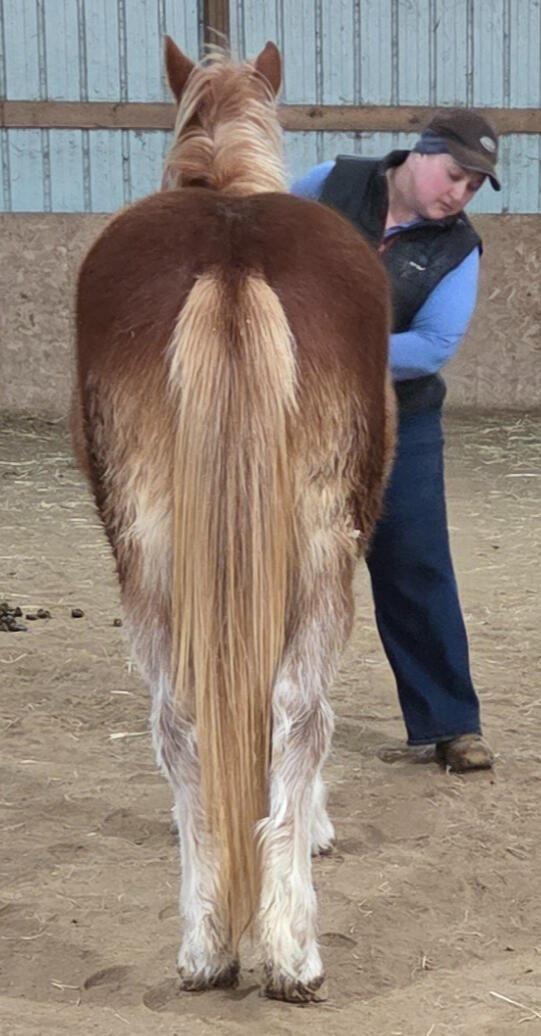
Keep your horse at home – I come to you! Whether you have your own barn or boarding at a facility, horse training can take place anywhere. I travel within 60 miles of Ellsworth, WI, however, some exceptions can be made. Give me a call - availability is limited - so contact me to see how we can work together to create a partnership between you and your horse.Horses learn best through connection. The bond you create with your horse becomes the foundation for everything you do together. When that connection is clear on the ground, it naturally carries into your time in the saddle. I work with you and your horse to help you build that bond, strengthen your communication, and develop mutual trust.
Training is done by you, with guidance from me. What better way to know what is going on your horse during training than being there yourself every step of the way? I walk you through step-by-step to build a confident relationship with you and your horse from the ground up.
Lessons
Communication with a horse is subtle. A light touch, a gentle squeeze of the leg, or a shift in posture, whether on the ground or in the saddle, can speak volumes. These cues are learned from the ground up, and they require us to be present, intentional, and aware.
It is up to us to learn how to communicate with a whisper and listen for the breath of a response.
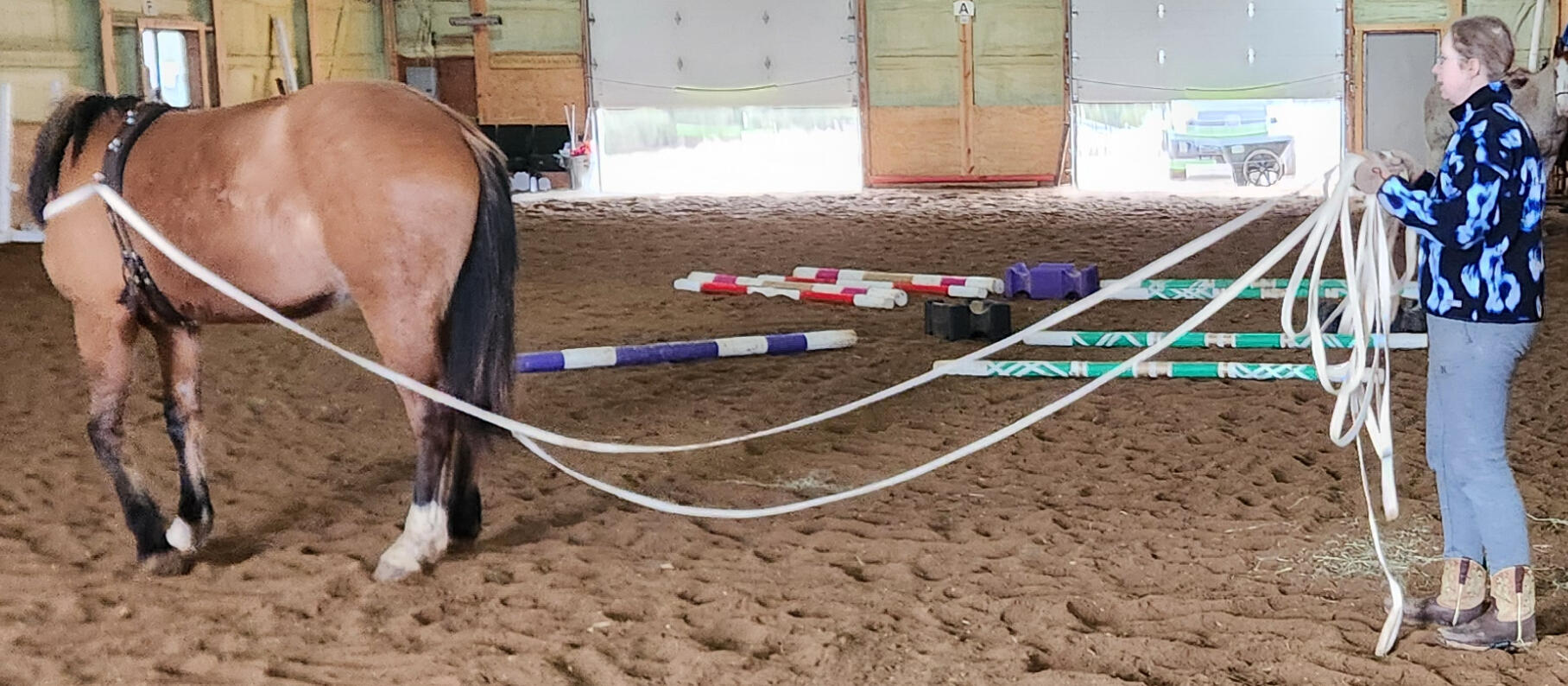
When working with a horse, we are asking them to be our friend, our partner, to give a mutual trust in one another. This kind of connection cannot be built through force or fear. We are asking a 1,000-pound animal to trust us, to carry us, to walk with us, and to partner with us through life. In return, we offer kindness, patience, and respect.
Equine Assisted Learning
(Through CCS)
Equine-assisted learning offers a unique way to develop life skills through meaningful interactions with horses. By fostering trust and communication, participants explore themes of self-regulation, empathy, and personal growth, all while building respectful relationships with their equine partners.
Groundwork serves as the foundation, creating safe connections and encouraging discussions on self-awareness and emotional resilience before any saddle work is considered. As participants develop confidence and understanding, they can further enrich their experience through activities such as grazing walks, nature hikes, and guided interactions, exploring themes of self-care, motivation, and personal reflection.
What is CCS?
Comprehensive Community Services (CCS) is a program that helps people of all ages live their best lives. It focuses on unique needs that relate to mental health and substance use.
CCS is meant to help with recovery. The program works to stabilize and address mental health and substance use concerns, which include:
• Self-managing physical health and social health.
• Meeting basic needs, such as housing, education, and work.
Those enrolled in CCS take control of their treatment and recovery. They work with a team to decide which services and supports will help them reach their goals.
To learn more about the CCS programs available in Wisconsin please visit:
About Jessi Homan
My passion for horses began at age four when my mom brought home the first horse I remember, Major. From that moment on, horses became central to my life. I immersed myself in horsemanship early on, showing in 4‑H by age eight and training horses for gymkhana events by age ten. Over the years, I trained and supported numerous horses in Western Pleasure, games, trail riding, and work with beginner riders.In 2013, I enrolled at the University of Wisconsin–River Falls to study Equine Management. During my first semester, I completed a technical review of a peer‑reviewed article on Equine-Assisted Psychotherapy. That paper became a turning point, it sparked a profound interest in the intersection of mental health and equine work. I soon changed my major to Psychology with a minor in Animal Science. Throughout my coursework, I expanded my knowledge of equine health, nutrition, behavior, and pasture management, all while continuing to train horses and support classmates in developing advanced horsemanship skills.After graduating in 2017, I continued to train, teach, and stay deeply involved in the equine world. In 2020, I left my day job to pursue this passion full‑time. I am now Level 1 trained in Natural Lifemanship, a Western Horsemanship trainer, and the owner of Horse Ways LLC, where I integrate equine-assisted services with mental health and personal development.Currently, I am pursuing my Master of Social Work (MSW) with the goal of becoming a clinical social worker who provides Equine-Assisted Therapy. This next step allows me to combine my lifelong connection with horses, my training in trauma‑informed equine practices, and my commitment to mental health to offer holistic, relationship‑based therapeutic services in the future.
Why the name "Horse Ways"
Many dream of that perfect partnership with their horse, where communication feels effortless and the horse moves freely, yet completely in sync with the rider. But how does that happen? How do we build that kind of relationship? The answer lies in listening, in trust, and in understanding the ways of the horse.When a horse resists an ask, it’s not always disobedience, it may be a misunderstanding, discomfort, or even a cry for help. What we often label as misbehavior is actually communication. As equestrians, it’s our responsibility to listen, respond, and grow alongside them. We’re not just training horses, they’re teaching us to better understand their world.
Contact Jessi
[email protected]
920-819-8291